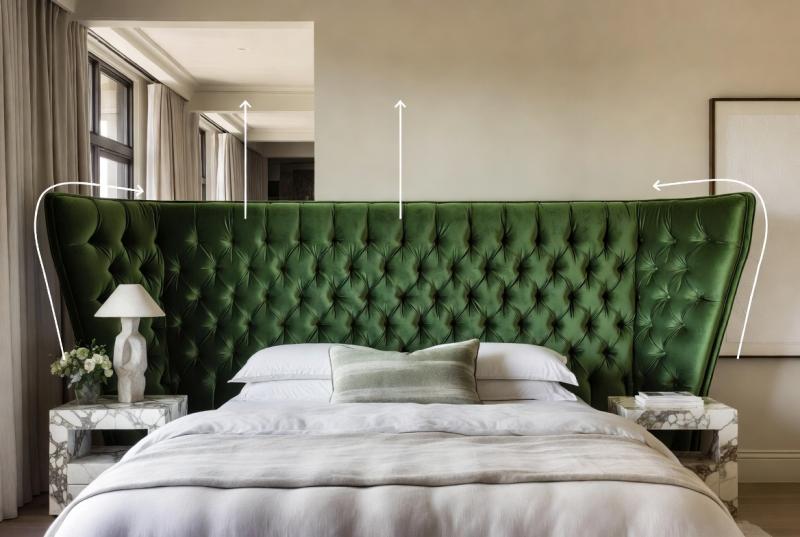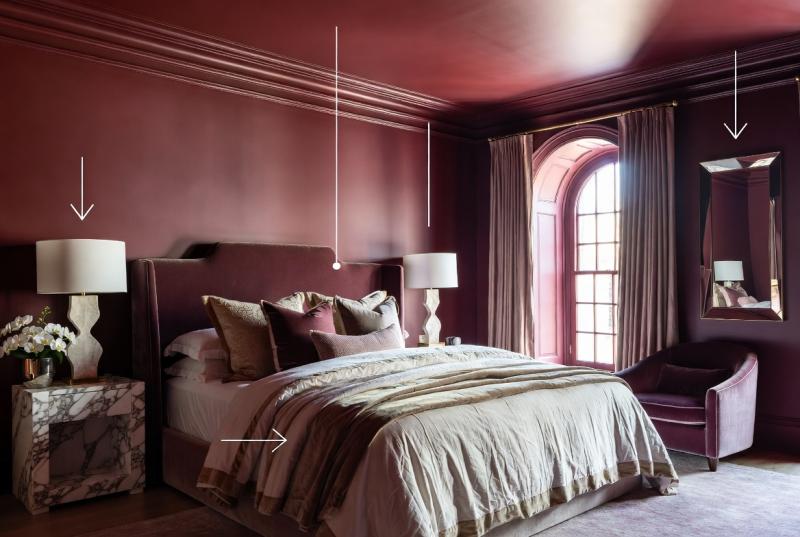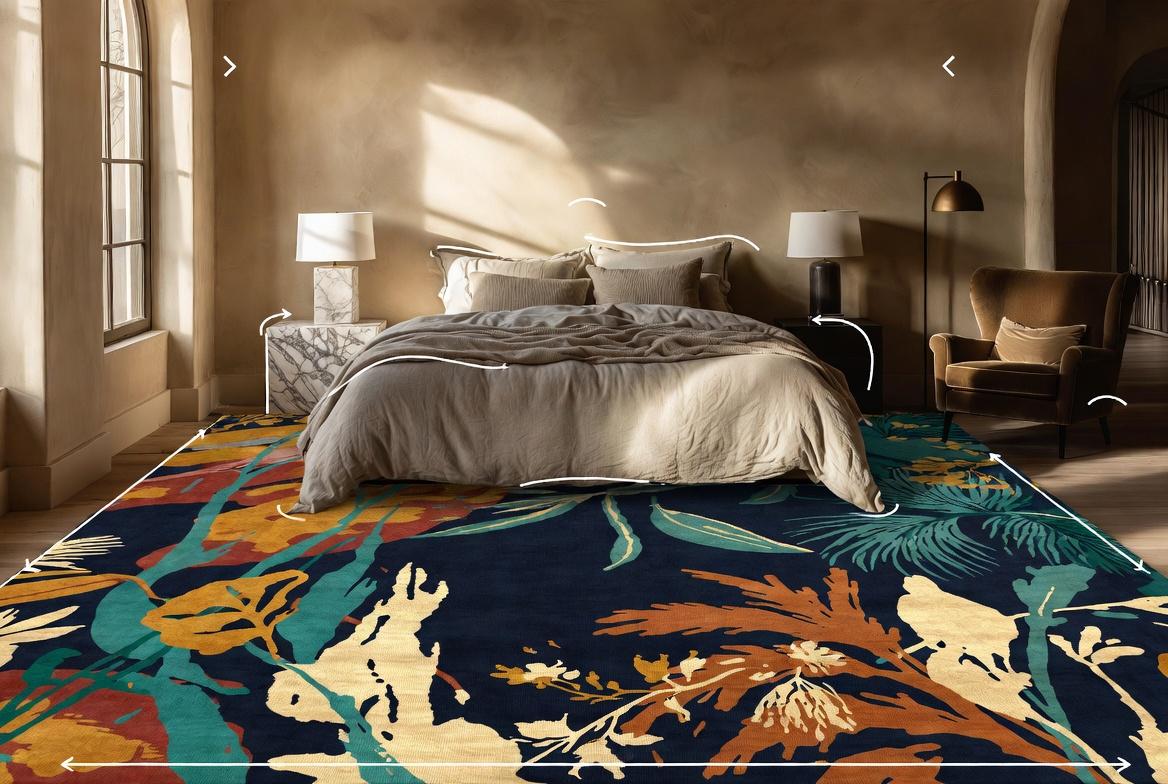
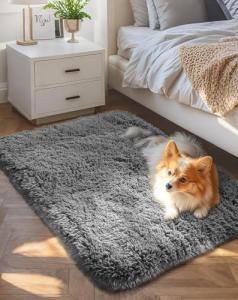
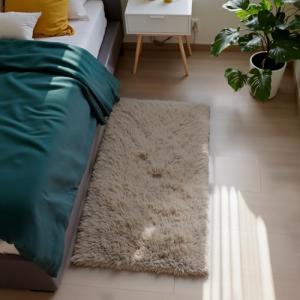
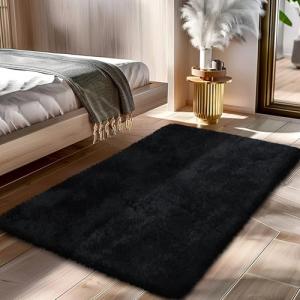
There's a long-standing conspiracy in interior design — one perpetuated by minimalist Pinterest boards and cautious real estate staging — that the bedroom floor should be quiet. Beige, cream, grey, maybe a simple stripe if you're feeling daring. Something that "goes with everything," which is another way of saying something that goes with nothing, that contributes nothing, that simply exists beneath your feet as a surface and nothing more.
That conspiracy deserves to be dismantled.
The rug beneath your bed is, without argument, one of the most visually dominant objects in the room. It sits at eye level the moment you walk through the door. It anchors every other piece of furniture. It's the first thing you feel when you step out of bed in the morning and the last surface you touch before you sleep. And yet, somehow, we've collectively agreed to treat it like a formality — a buffer between hardwood and sock, rather than a design statement with genuine power.
Bold patterned rugs, and especially the newer wave of illustrated statement rugs, are dismantling that thinking entirely. And the bedrooms that have embraced them are some of the most memorable, most personal, most genuinely alive spaces being created right now.
What "Bold Pattern" Actually Means in 2026
The phrase "bold pattern" has been flattened by overuse. It gets applied to everything from a subtle trellis repeat to a full-blown hand-knotted narrative carpet, which makes it nearly useless as a descriptor. So let's be more precise.
A bold patterned rug, in the truest sense, is one that commands visual authority. It doesn't whisper a suggestion — it makes a claim. That claim can take many forms. It might be geometric: strong repeating diamonds or octagons in high-contrast colors that create an almost optical tension, the kind of rug that makes a room feel like it has a heartbeat. It might be organic: oversized florals in terracotta and forest green that bring the feeling of a botanical archive into a private sleeping space. It might be abstract: loosely painted gestural forms, brushstroke-like marks in ochre and navy and burnt sienna, as though a canvas fell from the wall and decided to become a floor.
What these all share is intentionality. They were not designed to disappear. They were designed to be seen, to be the thing that someone notices first and remembers longest.
The shift that's happened in the last few years is that this kind of visual authority has migrated from the living room — where we've long accepted that rugs can be expressive — into the bedroom, where they've historically been politely subdued. The argument against bold bedroom rugs has always been that the bedroom is a place of rest, and bold patterns are stimulating, and stimulation is the enemy of sleep. That argument, it turns out, conflates bold with chaotic. A strong pattern is not the same as a restless one.
The Rise of the Illustrated Rug: Art That Lives on the Floor
If bold geometric and floral rugs represent one branch of the statement rug movement, illustrated rugs are an entirely different creature — and in many ways a more interesting one.
The illustrated rug is exactly what it sounds like: a rug that functions as an image, a scene, a piece of narrative art rendered in fiber. These aren't abstract compositions. They're specific. A sleeping figure surrounded by oversized moths and moons. A dense jungle scene in which tigers and birds and foliage compete for space. A celestial map, all constellations and zodiac figures, laid out in cream and gold on a deep midnight ground. A portrait. A still life. A map of a city.
The illustrated rug category has exploded largely because of the intersection of digital design tools and traditional textile manufacturing. What was once prohibitively expensive — producing a rug with the resolution and specificity to render figurative imagery clearly — has become accessible through digital printing on flat-weave textiles, advances in hand-tufted production, and a growing market of independent textile designers who have figured out how to translate illustration into pile.
The results are extraordinary. Designers like Cold Picnic, whose rugs draw from folk art and psychedelia in equal measure, helped establish the concept in the design-forward market. Studios like Matta and Beni Rugs brought Moroccan and North African weaving traditions into conversation with contemporary illustrated forms. And a generation of independent artists — many of whom came up through print and surface pattern design — have built entire practices around illustrated textile work, much of it destined for bedroom floors.
What makes the illustrated rug so potent as a bedroom design tool is its specificity. A bedroom should, more than any other room in a home, reflect who the person sleeping in it actually is. Not who they think they should be, not some aspirational version of their personality, but the actual, specific, idiosyncratic human who wakes up in that bed every morning. An illustrated rug is, more than almost any other single object, capable of doing that. It's a picture. It tells a story. It holds a worldview.
How Bold Rugs Work Architecturally
There's a practical dimension to all of this that gets lost in the aesthetics conversation, and it matters: bold patterned and illustrated rugs are not just decorative additions to a bedroom. They function architecturally.
In a room with little furniture or molding detail — the clean, white-walled bedrooms that dominate contemporary apartment living — a strong rug introduces visual complexity where the architecture provides none. It creates a sense of richness and layering that would otherwise require expensive interventions: wallpaper, built-ins, decorative plasterwork. The rug does the architectural heavy lifting.
In a room that already has detail — wood paneling, patterned wallpaper, ornate furniture — a bold rug plays a different role. Here it grounds everything, pulling the eye downward and establishing a visual anchor that prevents the room from feeling like a collection of competing objects. The rug becomes the mediating element, the thing that says: all of these distinct pieces belong to the same world.
Scale matters enormously. A statement rug needs to be large enough to carry its own authority. The classic error is choosing a rug that's too small — one that gets lost under the bed frame, its pattern barely visible, its drama entirely unrealized. For a queen or king bed, the rug should extend well beyond the frame on three sides, ideally two to three feet on each side and at the foot. The rug is not an accessory to the bed. The rug and the bed are equals, or the rug is in charge.
Proportion is where many people get timid, and timidity is the enemy of the whole endeavor. A rug that's slightly too large is almost always better than one that's slightly too small. The former creates grandeur; the latter creates confusion.
Color Strategy: Letting the Rug Lead
The most common design anxiety around bold bedroom rugs is color: if the rug has strong color, how does the rest of the room coexist without chaos?
The answer involves a fundamental reorientation of the design process. Normally, people choose furniture, walls, and bedding first, then look for a rug that coordinates. With a statement rug, you invert this. You choose the rug first — or you treat it as the primary chromatic decision — and everything else follows its lead.
This sounds risky but is actually liberating. When the rug contains, say, deep burgundy, burnt orange, cream, and a touch of olive, you don't need to solve a color problem. The rug has solved it for you. Pull one of those colors for the bedding, another for the curtains, leave the walls neutral, and the room has coherence. The rug is doing the curation.
Bold illustrated rugs in particular tend to contain a surprisingly wide range of tones within a unified palette, precisely because good illustration requires tonal complexity to read clearly. This makes them easier to work with than you'd think. They bring their own world, and you're simply selecting which elements of that world to echo.
The rooms that go wrong are ones that resist the rug — that try to have a neutral, calm palette elsewhere while the rug blazes with color, treating the rug as an intrusion rather than the organizing principle. The rug can't function as a statement if the room is trying to apologize for it.
Texture, Material, and the Difference They Make
Pattern and illustration are the obvious conversation points, but material is where the real magic happens — and where many statement rugs either succeed completely or fall short.
A high-pile wool rug with an oversized geometric pattern in jewel tones is a completely different sensory object than the same pattern rendered in a flat-weave cotton. Both might be visually bold, but one has depth, warmth, and a kind of physical presence that the other doesn't. The pile creates shadow and dimension within the pattern itself, so that what looks like a flat design in photography reveals itself as an almost sculptural object in person.
Hand-knotted rugs, the oldest and most labor-intensive category, carry their own particular quality of surface. The slight irregularities in a hand-knotted piece — the minor variations in pile height, the way the pattern blurs very slightly at edges — give it a vitality that machine-made rugs struggle to replicate. An illustrated rug in this medium becomes genuinely painterly.
Flat-weave kilims and dhurries offer something different: clarity. The pattern is crisp, graphic, unmodulated by pile height. For very bold geometric designs, this precision can be exactly right. For illustrated rugs, it's a stylistic choice that pushes toward something graphic and print-like, which suits some aesthetics and not others.
Tufted rugs sit somewhere between these poles. They can achieve the density and softness of a knotted rug while allowing more design flexibility — tufting works well with complex illustrated forms. Many of the most striking illustrated rugs currently on the market are hand-tufted, which makes them more accessible price-wise while still delivering a premium feel underfoot.
The material decision is inseparable from the sensory experience of the bedroom. You're not just looking at this rug. You're stepping onto it barefoot in the half-dark of morning. The right texture doesn't just look good — it feels like a small daily luxury, which is perhaps the most bedroom-specific quality any object can have.
Layering Rugs: The Advanced Move
One of the more interesting directions in contemporary bedroom styling is the layered rug — placing a smaller statement rug over a larger neutral ground rug, or layering two rugs with different patterns in intentional relationship to each other.
The layered approach solves a specific problem: the desire for a statement at the foot of or around the bed, without committing the entire floor to a single strong piece. A large natural jute or sisal rug provides texture and warmth across the whole floor; a smaller illustrated or bold-patterned rug sits on top, centered at the foot of the bed or running horizontally across it, the two layers creating a kind of visual dialogue.
When two patterned rugs are layered, the key is tonal relationship rather than pattern coordination. A deep-ground floral rug layered over a lighter geometric can work beautifully if the colors are in the same family. What you're avoiding is two rugs of similar scale and similar intensity competing for dominance — that's where the chaos actually lives.
The layered rug also introduces a sense of accumulation that's particularly appealing in bedrooms that aim for an eclectically curated feeling. It suggests that these objects were collected, not purchased as a set — that the room has a history. In a design landscape that's grown skeptical of interiors that look too assembled, too coordinated, too deliberately finished, layering is an antidote.
Statement Rugs in Small Bedrooms: The Counter-Intuitive Truth
The conventional wisdom says that small rooms need small patterns and light colors — that bold designs will overwhelm a compact space and make it feel even more claustrophobic. The conventional wisdom is wrong, or at least much more complicated than that.
A bold patterned rug in a small bedroom can actually create the illusion of more space, not less, by giving the eye something specific and interesting to focus on. When every surface in a small room is neutral, the room reads as spare and tight, with nothing to draw attention away from its limitations. A strong rug introduces depth, complexity, and visual richness that makes the room feel intentional rather than merely small.
The more important variable in a small bedroom isn't the scale or boldness of the rug pattern — it's the proportion of the rug to the room. A statement rug in a small bedroom should still extend to near the room's edges, leaving only a narrow border of floor visible. The rug should fill the space, not float within it. A correctly proportioned large rug in a small room reads as expansive; a small rug in the same room reads as cramped.
What does change in a small bedroom is ceiling height and light availability. If the room is dark and low-ceilinged, a rug with a dark ground and strong pattern will absorb light and can feel heavy. In this case, choosing a statement rug with a lighter ground — cream, warm white, pale terracotta — that contains strong pattern elements preserves the boldness while keeping the room breathing.
The Illustrated Rug as Autobiography
Beyond all the spatial and chromatic practicalities, there is something worth saying about the illustrated rug as a personal object — as a form of self-expression that happens to be functional.
The bedroom is the room we share with almost nobody. It's the room where we are most fully ourselves, where the performance of public life is suspended. The objects we choose for it are, whether we consciously intend it or not, the objects we choose because we actually want them, not because they'll impress anyone, not because they coordinate with a shared living space, not because they're sensible.
An illustrated rug depicting a forest floor covered in mushrooms and roots. A carpet of entwined mythological figures. An abstract rug that looks like a night sky viewed through rain-streaked glass. These are objects with point of view, with inner life, with something specific to say. Choosing one for your bedroom floor is an act of commitment to your own taste — an acknowledgment that the floor beneath your bed deserves as much thought and care as any wall or piece of furniture.
There is, finally, something profound about placing art underfoot. Western aesthetic tradition has generally insisted that art belongs on walls, elevated, protected from contact. The rug inverts this. It places the image in a position of intimacy — you walk on it, sit on it, lie on it, see it in peripheral vision throughout your waking and sleeping hours. The relationship between person and illustrated rug is more bodily, more continuous, more physically present than any relationship with a painting. It's art you live inside.
Where to Find Them: Navigating the Market
The statement rug market has matured considerably, with options at every price point.
At the high end, hand-knotted antique and semi-antique rugs — Persian, Caucasian, Central Asian — offer the boldest illustrated and geometric traditions in textile history, with the depth of quality that comes from pieces that have survived decades of use. Dealers like Doris Leslie Blau, Nazmiyal, and the many smaller specialists found in design districts from London to Istanbul offer access to pieces that are genuinely irreplaceable.
In the mid-market, studios like Loloi, Surya, and Safavieh offer machine-made and hand-tufted options with strong design sensibility at accessible prices. Independent designers selling through platforms like Etsy, or through their own direct-to-consumer sites, increasingly offer illustrated rugs with the kind of specificity and quirkiness that the major commercial market rarely achieves. The illustrated rug space in particular is dominated by independent designers — people who came up through surface pattern and illustration and have found that textile is the medium they want to work in.
Vintage and secondhand markets — 1stDibs, Chairish, eBay, local estate sales — remain among the most reliable sources for genuinely unusual rugs at prices that make no rational sense given their quality. The mid-century Scandinavian flat-weave, the 1970s Turkish kilim, the anonymous dhurrie from a rural South Asian market — these are, frequently, among the most interesting and most affordable statement rugs available.
The Last Word from the Floor Up
There's a version of the bedroom that is restrained, serene, almost clinical in its quietness — and that version has its devotees, and its logic, and its particular beauty. This piece is not addressed to those bedrooms.
It's addressed to the bedroom that wants to say something. The bedroom that understands that sleep is not just a functional act but a surrender, a nightly return to a private world, and that private world deserves to be built with as much care and personality as any public-facing room in the house.
The rug is where that conversation starts. Not with the walls, not with the bed, not with the furniture — but with the floor, the most intimate surface of all, the one that holds you up.
Put something worth looking at there. Put something that tells the truth about who you are. Go bold. Go illustrated. Go strange, or luxurious, or graphic, or folkloric, or dreamlike.
The floor is not neutral territory. It never was.