Looking for the perfect floor lamp to brighten up your bedroom? These stylish lamps not only add light but also enhance your decor. Whether you need a cozy reading nook or a soft glow for relaxing evenings, there's a floor lamp that fits your style and needs.
Floor Lamps
Product List
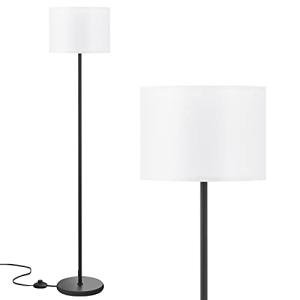
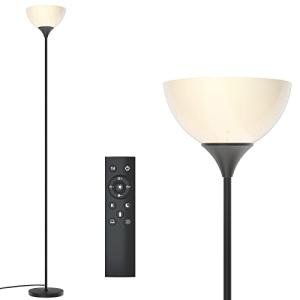
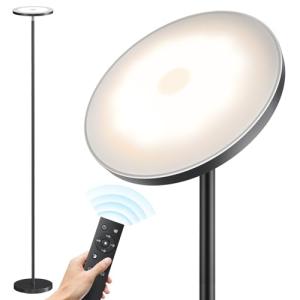
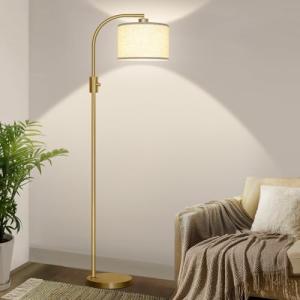
Why Floor Lamps Belong in Every Room
Most people think about floor lamps as an afterthought — something you grab when overhead lighting feels too harsh or a corner looks too dark. But the best interior designers treat floor lamps as primary tools, not backup solutions.
Here's why they matter so much:
Layered lighting is the secret behind every beautiful, inviting interior. Designers talk about three layers: ambient (general illumination), task (focused light for working or reading), and accent (decorative, mood-setting glow). A single overhead fixture handles the first layer. Floor lamps handle the other two — and they do it with style.
Floor lamps are also uniquely flexible. Unlike recessed lighting or wall sconces, you can move them. Redecorating? Pick up the lamp and try it somewhere new. Renting and can't install fixtures? Floor lamps are your best friend. Hosting a dinner party and want a different vibe in the living room? Move the lamp three feet to the left and see what happens.
And then there's the sheer design impact. A great floor lamp is a sculptural object. It's art you can turn on.
The Main Types of Floor Lamps (And Where Each One Shines)
Not all floor lamps are built for the same purpose. Understanding the basic categories helps you cut through the noise and find exactly what your space needs.
Arc Floor Lamps
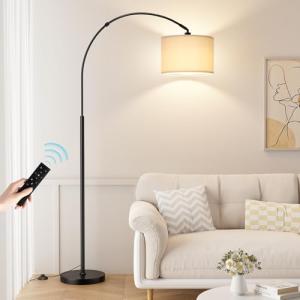
Arc lamps are the statement-makers. Their long, sweeping arms extend outward — sometimes dramatically — to position the light source directly over a seating area, dining table, or reading nook. The base sits off to the side while the shade hovers above, creating a look that's simultaneously architectural and practical.
If you've ever wanted the look of a pendant light but can't (or don't want to) drill into the ceiling, an arc lamp is your answer. They work especially well in minimalist, Scandinavian, and mid-century modern interiors, though bold contemporary arc lamps in matte black or brushed brass can hold their own in almost any style of room.
The main consideration with arc lamps is weight and stability. The best ones have heavy marble, stone, or weighted metal bases that keep the lamp grounded even when the arm extends fully. Don't skimp here — a top-heavy arc lamp with a flimsy base is a hazard waiting to happen.
Torchiere Floor Lamps
Torchieres point upward. Instead of directing light down onto a surface, they send it toward the ceiling, which then reflects it back into the room as soft, diffused ambient light. The result is warm, even illumination that eliminates harsh shadows and makes a room feel larger and more relaxed.
These are workhorses. They're the floor lamp equivalent of a reliable sedan — not necessarily flashy, but they do exactly what they're supposed to do, consistently and well. Torchieres are ideal for living rooms, bedrooms, and any space where you want gentle, room-filling light without the directional glare of a downward shade.
Modern torchieres have moved well beyond the dated halogen versions from the nineties. Today you'll find them in elegant sculptural forms, with LED light sources that stay cool to the touch and last for years, and in finishes ranging from warm antique brass to contemporary matte nickel.
Task and Reading Floor Lamps
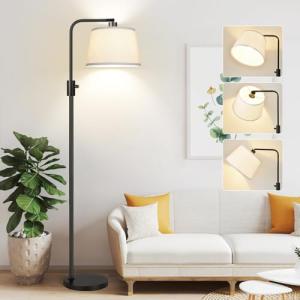
These are purpose-built for focus. A reading lamp typically features an adjustable arm or gooseneck that lets you direct light exactly where you need it — onto a book, a laptop screen, a piece of needlework, or whatever task has your attention. Many include dimmer switches or multiple brightness settings so you can fine-tune the intensity.
The best reading floor lamps deliver bright, clear light without glare or flicker. Look for ones with a color temperature in the 2700K–3000K range for a warm, natural feel that's easier on the eyes during extended reading sessions, or go up to 4000K if you prefer something closer to daylight.
Adjustable floor lamps also double as portrait photography tools, craft room essentials, and home office additions for anyone who needs directional light without committing to a desk lamp.
Tripod Floor Lamps
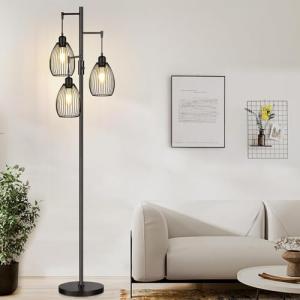
Tripod lamps are as much about aesthetics as function. Their three-legged base gives them a distinctive, camera-stand silhouette that works beautifully in bohemian, industrial, mid-century, and eclectic interiors. Pair a tripod base in natural wood with a linen drum shade and you have something that looks like it belongs in a design magazine.
They're generally stable and fairly slim in profile, which makes them a good choice for smaller rooms where a bulky base would eat up precious floor space.
Column and Pharmacy Floor Lamps
Column lamps — sometimes called pharmacy lamps or club lamps — have a tall, straight stem with a shade angled slightly downward. They're elegant, unobtrusive, and versatile. The pharmacy lamp in particular has a long history in both professional settings (law offices, libraries) and residential ones, and for good reason: the adjustable shade puts light exactly where you need it, and the slim profile fits anywhere.
If you want a floor lamp that doesn't shout for attention but quietly makes everything better, a classic pharmacy-style lamp is hard to beat.
Choosing the Right Bulb and Light Quality
The lamp is only half the equation. The bulb determines whether your room feels cozy and inviting or cold and clinical.
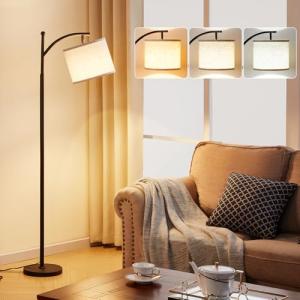
Color temperature is measured in Kelvins (K). Lower numbers mean warmer light (more orange/yellow); higher numbers mean cooler light (more blue/white). For living rooms and bedrooms, stay in the 2700K–3000K range. For home offices, studios, or task-heavy spaces, 3500K–4000K keeps you alert and helps you see detail clearly.
Lumens tell you how bright the bulb is. Don't get hung up on wattage — that's a measure of energy consumption, not brightness. A 10-watt LED can produce the same lumens as a 60-watt incandescent. For a reading lamp, look for at least 450–800 lumens. For ambient lighting, you might want 1,000 lumens or more depending on room size.
LED vs. other options: Modern LEDs have essentially won the bulb war. They're energy-efficient, long-lasting (often 15,000–25,000 hours), produce very little heat, and are available in a huge range of color temperatures and brightness levels. Unless you're specifically going for the vintage look of an Edison-style filament bulb (which, for the record, looks absolutely beautiful in the right setting), LED is the sensible choice.
One thing worth checking: if you want to use a dimmer switch, confirm that both the lamp and the bulb are dimmer-compatible. Not all LEDs work smoothly with all dimmers, and the resulting flicker is maddening.
Style and Finish — Getting the Look Right
Floor lamps come in every finish imaginable: matte black, polished chrome, antique brass, satin nickel, oil-rubbed bronze, warm gold, natural wood, powder-coated colors, and more. Getting the finish right is about more than just matching metals — it's about understanding the story your room is trying to tell.
Matte black is contemporary and bold. It works in modern, industrial, and minimalist spaces, and it reads as clean and intentional without being cold.
Brass and gold tones have made a massive comeback and show no signs of slowing down. Warm brass adds richness and a sense of quality. It pairs beautifully with earthy tones, velvet upholstery, and organic materials like wood and rattan.
Brushed nickel and chrome are the neutral players — they go with nearly anything and rarely clash. If you're uncertain about finish, brushed nickel is a safe and elegant default.
Natural wood brings warmth and texture into a room. Wood-and-metal combinations — think a walnut tripod base with a black shade — are particularly popular and strike a balance between natural and contemporary.
Shade material matters too. A white linen shade diffuses light softly and warmly. A metal shade directs light more precisely and gives an industrial or vintage feel. A frosted glass shade creates a glowing, sculptural effect that looks beautiful even when the lamp is off.
Sizing Your Floor Lamp to Your Space
Scale is everything. A lamp that's too tall looks precarious and awkward; one that's too short fails to illuminate the space properly and looks equally strange.
As a general rule, the top of a floor lamp's shade should sit somewhere between 58 and 64 inches from the floor for most standard residential spaces. If the lamp is positioned next to a sofa, the bottom of the shade should be at or slightly above eye level when you're seated — roughly 40–42 inches from the floor — to avoid glare.
For arc lamps that extend over seating areas, make sure there's enough clearance above the people sitting below. Seven feet of overhead clearance is a comfortable minimum.
In smaller rooms, look for lamps with slim bases and vertical lines that draw the eye upward rather than outward. In larger rooms, you can go bolder — a dramatic arc lamp with a wide base, or a large torchiere that commands the room.
Smart Floor Lamps and Modern Features
The humble floor lamp has gone high-tech. Today's options include:
- Built-in dimmer switches on the lamp body or cord, letting you adjust brightness without needing a smart plug or wall dimmer
- USB and wireless charging ports integrated into the base — particularly useful next to a reading chair or bedside area
- Smart bulb compatibility and Wi-Fi-enabled lamps that connect to voice assistants (Alexa, Google Home) and let you control brightness, color temperature, and on/off scheduling from your phone
- Color-changing LEDs that let you shift the room's mood from warm amber to cool white to full-spectrum color with an app or voice command
These features add real everyday convenience, especially in living rooms and bedrooms where you want quick, easy control over atmosphere without getting up to fumble with a switch.
What to Look for When You're Ready to Buy
Before you commit, run through these questions:
What's the primary purpose? Reading and task work needs directional, adjustable light. Ambient lounging needs soft, diffused uplight or downlight. Decorative impact needs a sculptural, visually interesting form.
What's the room's style? The lamp should feel like it belongs — not like it was grabbed from a different room in a different house.
What's the scale of the space? Measure your ceiling height, the wall area where the lamp will sit, and the furniture it'll sit next to.
What's the budget? Floor lamps range from under $50 to several thousand dollars. The good news: quality and beauty exist at every price point. Spend more on the base (durability and weight matter) and you can often find a shade separately if the included one doesn't suit you.
Is cord management an issue? Consider where the nearest outlet is and whether a cord will need to cross foot-traffic areas. Some lamps include cord covers or built-in channels; others don't.
A great floor lamp does something no overhead fixture can: it creates intimacy. It carves out a pool of light in a corner of the room, pulls you in, and makes you want to stay. It makes a reading chair feel like a sanctuary. It turns a blank wall into a backdrop for something beautiful.
In a world full of flat, interchangeable interiors, a thoughtfully chosen floor lamp is one of the easiest ways to make a space feel genuinely, distinctly yours. Browse with intention, think about how you actually live in the room, and don't be afraid to choose something that makes you feel something when you look at it.
That's the point.