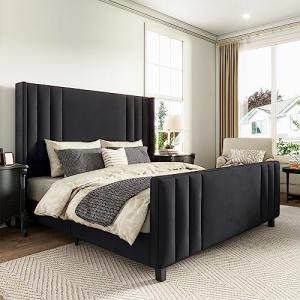
Why Headboards & Footboards Actually Matter
It's easy to think of these pieces as purely decorative — nice to have, but not essential. The reality is a little more nuanced.
A headboard does several things at once. It protects your wall from scuffs and oil from pillows over years of use. It gives you something solid to lean against when you're reading, watching TV, or working from bed. And visually, it anchors the entire bed to the room, making the space feel intentional and finished rather than hastily put together.
Footboards are a different conversation. They add a sense of enclosure and coziness, keep your bedding from slipping off the end of the mattress during the night, and contribute structural support to the overall bed frame. That said, they're also the more personal choice — some people love the contained, complete feeling a footboard creates, while others find them restrictive, especially if they're tall or tend to sprawl. Neither preference is wrong; it really comes down to how you sleep and how you want the room to look.
Together, a matching headboard and footboard set creates a unified, intentional aesthetic that transforms a mattress on a frame into a proper bed. The difference in how a room feels with and without them is hard to describe until you've experienced it.
Styles: Finding the One That Fits Your Room
Upholstered Headboards & Footboards
If warmth and comfort are your priority, upholstered pieces are hard to beat. Wrapped in fabric — linen, velvet, boucle, chenille, or performance polyester — they bring a softness to the room that wood and metal simply can't replicate. They're the obvious choice for anyone who spends real time leaning against the headboard, since the padded surface is far more comfortable than a hard edge.
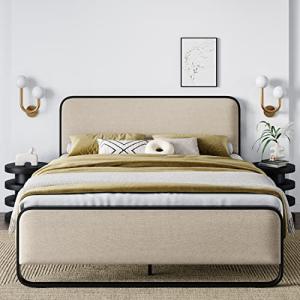
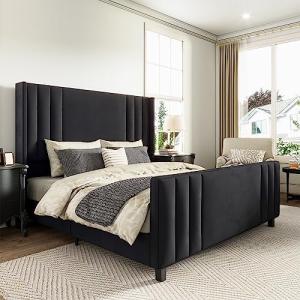
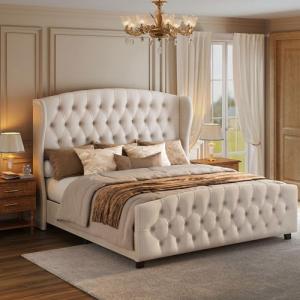
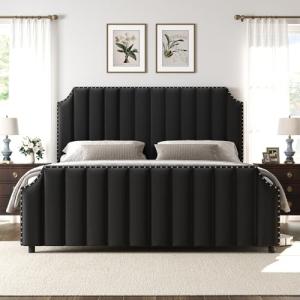
Within upholstered styles, you'll find quite a bit of range. Tufted headboards with button or diamond patterns have a classic, tailored look that suits traditional and transitional bedrooms well. Channel-stitched designs feel more contemporary and clean-lined. Wingback headboards — with the characteristic upswept sides — are a perennial favorite for people who want something that looks like it belongs in a boutique hotel. They create a sense of enclosure without needing a full canopy or four-poster structure.
Color matters here too. Neutral tones like linen, oatmeal, grey, and ivory are the most versatile and the easiest to update around as your style evolves. Richer tones — navy, forest green, deep rust — make a statement and can anchor a room's palette beautifully, but they require a bit more commitment.
Wood Headboards & Footboards
Wood brings warmth and history into a space in a way few other materials can. From clean Scandinavian panels in light oak to rustic farmhouse spindles in white-painted pine, the range of what "wooden headboard" can mean is enormous.
Panel headboards are among the most versatile — a flat or slightly recessed wooden panel that works in almost any setting, from contemporary to traditional. Spindle designs evoke vintage and cottage aesthetics, with their vertical turned posts that recall old-fashioned beds from earlier decades. Slatted headboards are lighter and airier, popular in modern and bohemian spaces where the goal is texture without heaviness.
The type of wood matters as much as the design. Solid hardwoods like oak, walnut, and mahogany are durable and age gracefully, developing character over years of use. Engineered wood and MDF offer more affordable price points and can look excellent, but they're heavier and less forgiving of moisture. Kiln-dried solid wood is the gold standard for longevity — it resists warping and splitting better than wood that hasn't been properly dried before construction.
Finish choices run from natural and light (blonde oak, white maple) through warm midtones (honey, natural walnut) to deep, rich tones (espresso, dark walnut, ebony). Light finishes open a room up; dark finishes ground it and add drama.
Metal Headboards & Footboards
Metal frames and headboards have had a serious design moment over the last several years, and it's easy to see why. They're versatile, durable, and can look completely different depending on the finish and design — from airy and romantic to bold and industrial.
Wrought iron with scrollwork and flowing curves is a classic for traditional and romantic bedroom aesthetics. Simple geometric metal frames in matte black or gunmetal work brilliantly in industrial, Scandinavian, and minimalist spaces. Hammered finishes add artisan character. Antique brass and gold tones bring warmth and a glamorous quality that's having a real moment right now, particularly in maximalist and eclectic interiors.
One of the practical advantages of metal headboards is their relative lightness compared to solid wood. They're also typically easier to assemble and, because they don't have upholstery or complex wood joinery, they hold up very well over time.
Rattan, Wicker & Natural Materials
For anyone drawn to coastal, bohemian, or organic modern aesthetics, rattan and wicker headboards offer something genuinely different. The woven texture creates visual interest without weight, the natural tones are warm and easy to style around, and they bring an informal, lived-in energy that feels relaxed rather than overwrought.
Woven banana stem, seagrass, and cane are similar options in this family, each with slightly different textures and tones. These materials pair particularly well with linen bedding, warm wood furniture, and plenty of natural light.
Headboard Only vs. Full Set: What Makes Sense for You?
This is one of the most common questions shoppers face, and the honest answer is that there's no universal right choice.
A headboard-only approach makes sense if you sleep in a platform bed that doesn't require (or accommodate) a footboard, if you prefer the open feel of an unenclosed bed, or if you're in a smaller room where a footboard would make it harder to move around the end of the bed. It's also the better option if you tend to sleep stretched out and like the freedom of not having a barrier at your feet.
A full headboard and footboard set creates a complete, cohesive look that's hard to achieve any other way. The visual symmetry of matching pieces at both ends of the bed gives the whole piece a furniture-quality finish that a headboard alone can't quite replicate. Sets also come with matching side rails that ensure proper structural alignment, which can matter for long-term stability.
If you're drawn to a full set but worried about footboard height, keep in mind that low-profile footboards give you the best of both worlds — a finished, enclosed look without the barrier feel of a tall traditional footboard.
Getting the Sizing Right
Headboards and footboards are sized to match standard mattress dimensions — Twin, Full, Queen, King, and California King. The general rule is to match the headboard width to your mattress size, though some people intentionally choose a slightly wider headboard for a grander, more architectural effect. A King headboard on a Queen-sized mattress, for instance, can look intentionally oversized and luxurious in the right context.
Height is where personal preference and ceiling height come into play. Low-profile headboards (typically 40 inches or less) suit rooms with standard ceilings and create a contemporary, unobtrusive look. Mid-height headboards (40–55 inches) are the sweet spot for most bedrooms — substantial enough to make an impact without overwhelming the space. Tall headboards (55 inches and up, with some dramatic pieces reaching close to the ceiling) work beautifully in rooms with high ceilings and a desire for drama. They can double as a focal point that substitutes for artwork or other wall decoration behind the bed.
Materials, Durability & What to Look For
When shopping, the quality of construction matters as much as the design. Here's what to pay attention to:
For wood pieces, look for solid hardwood or at minimum solid wood frames with veneered panels. Joinery method matters — dovetail and mortise-and-tenon joints are signs of quality construction. Avoid pieces described only as "wood composite" without further specification.
For upholstered pieces, foam density affects how long the padding holds its shape. High-density foam maintains its form for years; cheaper foam compresses and flattens. Fabric quality matters too — performance fabrics and tightly woven polyester blends are more stain-resistant and longer-lasting than loosely woven naturals, which is worth considering if you have pets or children.
For metal pieces, gauge (thickness) of the metal determines durability. Powder-coated finishes resist scratching and chipping far better than painted finishes.
Styling Your Headboard & Footboard
Once you've chosen your pieces, styling the bed is where the real satisfaction kicks in. A few principles worth keeping in mind:
Let the headboard breathe. A tall, statement headboard is enough — it doesn't need to compete with a gallery wall, dramatic wallpaper, and a dozen throw pillows. Pick one focal point and let everything else support it.
Match the scale to the room. A towering upholstered wingback headboard can feel magnificent in a large primary bedroom and overwhelming in a smaller guest room. Measure your wall space and consider the visual weight of the piece relative to the room.
Coordinate without matching exactly. Your headboard doesn't have to match your nightstands or dresser in material or finish — in fact, mixing a wood headboard with metal nightstands or vice versa often looks more interesting than an exact match. What should align is the general design register: a traditional tufted headboard is going to look odd next to ultra-minimal Scandinavian furniture.
Consider the bedding. An ornate, heavily textured headboard pairs best with simpler bedding in solid colors or subtle patterns. A plain wood or metal headboard invites bolder bedding choices.
Practical Considerations Before You Buy
Check your bed frame compatibility. Headboards typically attach via bolt-through mounting to the bed frame's legs. Most frames use standard bolt spacing, but it's worth confirming before purchase — particularly with adjustable bed bases, which sometimes require a separate bracket kit.
Think about cleaning. Upholstered pieces require more maintenance than wood or metal. Light-colored upholstery in particular shows oils and dust over time. If ease of care is important to you, a performance fabric or a darker upholstery color will be more forgiving.
Consider assembly. Most headboards and footboard sets require some assembly. Full sets with side rails are more involved than standalone headboards, but the instructions are generally straightforward and the hardware is typically included.
A headboard and footboard aren't just furniture — they're the frame around the most personal space in your home. The right combination of style, material, and scale can transform a room from something that functions into something that actually feels like yours. Whether you're drawn to the plush comfort of a velvet upholstered wingback, the honest warmth of a solid oak panel, or the clean geometry of a matte black metal frame, there's a pairing that fits both your taste and your room.
Take your time, measure carefully, and don't underestimate the difference a well-chosen headboard can make. It's one of the few bedroom upgrades that you'll notice and appreciate every single day.