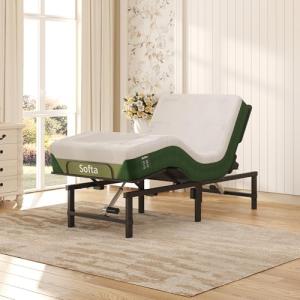
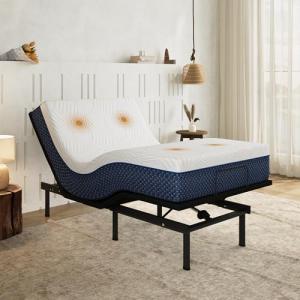
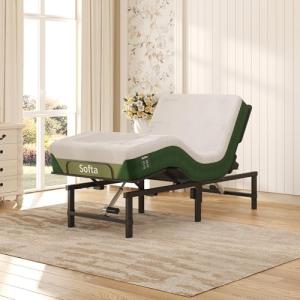
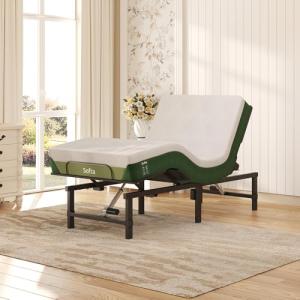
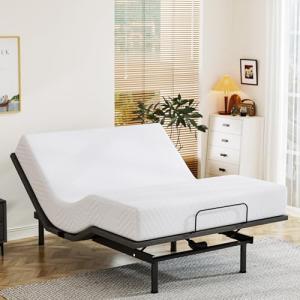
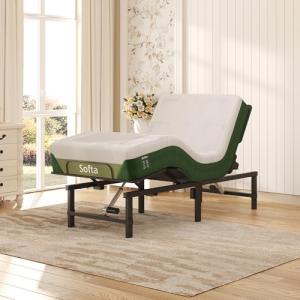
What Is an Adjustable Bed Frame?
Not too long ago, if you saw a bed that could raise its head and foot sections independently, you were probably in a hospital room. Today, adjustable bed frames have made their way into everyday homes — and for good reason. These motorized bases sit beneath your mattress and allow you to raise or lower different sections of the bed at the touch of a button, giving you a level of control over your sleep position that a traditional flat frame simply can't offer.
Think of it as upgrading from a bench seat to a fully reclinable driver's seat. Whether you want to prop yourself up for reading, elevate your legs after a long day, or find that perfect angle where your body actually feels at rest, an adjustable frame makes it possible without piling up pillows or fidgeting around for 20 minutes before you give up and just lie flat.
The category has grown enormously. The global adjustable bed frame market was valued at over $3.4 billion in 2025 and is projected to nearly double by 2034. That kind of growth doesn't happen because something is a gimmick — it happens because people are trying it and genuinely sleeping better.
Who Are Adjustable Bed Frames Actually For?
The honest answer is: a lot more people than you'd expect.
People with chronic pain. If you deal with lower back pain, hip pressure, or neck stiffness, changing your sleep position even slightly can make a significant difference. Elevating the head takes pressure off compressed spinal discs. Raising the foot section reduces strain on the lower back and improves circulation to tired legs.
People who snore or have sleep apnea. Sleeping flat on your back is one of the worst positions for snoring because gravity pulls soft tissue toward your airway. Elevating your head just 10–15 degrees opens the airway meaningfully. Many adjustable frames include a dedicated anti-snore preset that does exactly this with a single button press.
People with acid reflux or GERD. Lying completely flat allows stomach acid to travel upward. Keeping your head and torso elevated while you sleep helps gravity do its job and keep acid where it belongs.
Couples with different sleep preferences. With a split king or split queen setup, each side of the bed operates independently. One partner can be completely flat while the other has their head elevated at 45 degrees. No compromises, no sleep divorce.
Older adults and anyone with mobility limitations. Getting in and out of bed can be genuinely difficult for people dealing with joint pain, recovery from surgery, or reduced mobility. Being able to raise the head section to a semi-seated position makes transitions safer and less painful.
People who spend time in bed beyond just sleeping. Reading in bed, watching TV, scrolling your phone — all of these are more comfortable when your upper body is properly supported. If you've ever tried to watch a show lying flat and ended up craning your neck, you already understand the appeal.
Key Features to Look For
Not all adjustable frames are created equal, and it's worth understanding what separates a basic model from a genuinely useful one.
Head and Foot Articulation
At minimum, an adjustable frame should raise and lower the head section smoothly. Better models also let you independently adjust the foot section, which allows you to achieve the Zero Gravity position — a posture where your head and knees are both slightly elevated, distributing your body weight evenly across the surface and taking pressure off your lumbar spine. It's one of the most sought-after positions for people managing back pain or recovering from surgery.
Motor Quality and Noise
The motor is the heart of the system. A quality adjustable base should raise and lower with minimal sound — quiet enough that adjustments don't disturb a sleeping partner. Cheap motors often jerk during movement and wear out faster. When evaluating a frame, look for models tested for quiet operation, and pay attention to weight capacity as well. Most quality frames support between 650 and 1,000 pounds when you factor in both the mattress and the people sleeping on it.
Preset Positions
Good adjustable frames come with saved presets for common positions: Zero Gravity, Anti-Snore, Flat, TV/Reading, and sometimes Lounge. These let you return to a position you love with one press rather than hunting for the right setting every time. Premium models let you save custom positions.
Remote and App Control
Most frames come with a wired or wireless remote. Look for backlit buttons, a logical layout, and easy-to-distinguish controls. Many modern models also support app control from your smartphone, voice control through Alexa or Google Home, and even split-zone control where you can adjust both sides of a split bed from a single remote.
Massage Functions
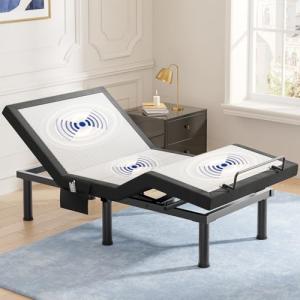
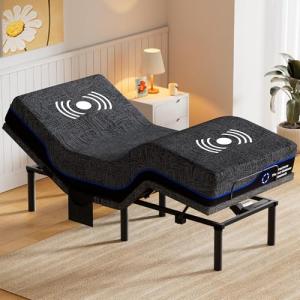
A number of mid-range and premium frames include built-in vibration massage at the head and foot sections, often with multiple intensity levels. This is genuinely soothing for muscle tension, though it's worth knowing that the massage on most frames is more of a gentle vibration than a deep tissue experience. If massage is a priority, look for models with multiple zones and adjustable intensity.
Under-Bed Lighting
A small feature that's surprisingly useful. Soft LED lighting under the frame illuminates the floor when you get up at night without needing to turn on a lamp and shock yourself awake at 3 a.m.
USB Charging Ports
Most modern frames include at least one USB-A port, and better models add USB-C as well. Having your charging cables run neatly through the frame keeps your nightstand tidier.
Wall-Hugging Design
When you raise the head section, your upper body naturally shifts toward the foot of the bed — moving you away from your headboard and nightstand. A wall-hugging base compensates by sliding the entire frame backward as it rises, so your reach to your phone and water glass stays the same.
Types of Adjustable Bed Frames
Single Unit
The most common type. The entire head section moves as one piece. Available in most mattress sizes: twin XL, full, queen, king, and California king. Works well for solo sleepers and couples who prefer the same position.
Split King / Split Queen
Two independent bases placed side by side, each controlled separately. A split king uses two twin XL mattresses that together equal king width. This is the go-to choice for couples with different sleep needs. There is a small gap between the two mattresses down the middle — something to know about before buying, especially if you tend to gravitate toward the center of the bed.
Price Ranges: What to Expect at Each Level
Budget ($300–$750 for a queen): Basic motorized adjustment of the head section, sometimes the foot section too. Quiet motor, simple remote, minimal extra features. A solid entry point if you're new to adjustable frames.
Mid-range ($750–$1,500 for a queen): This is where things get genuinely interesting. You'll typically find both head and foot adjustment, Zero Gravity and Anti-Snore presets, massage functions, USB ports, under-bed lighting, and wall-hugging design. This tier is the sweet spot for most buyers — especially those managing pain or sleep issues.
Premium ($1,500+ for a queen): Everything from the mid-range tier, plus sleep tracking integrated into a dedicated app, smart home compatibility, voice assistant control, programmable lighting, and sometimes even speaker systems built into the frame. Brands like Tempur-Pedic and Sleep Number operate at this level.
Mattress Compatibility
Before purchasing, check that your mattress is compatible with an adjustable base. Most memory foam, latex, and hybrid mattresses flex easily and work well. Traditional innerspring mattresses with a rigid coil system don't bend as readily and can be damaged over time by the movement. The general rule: if your mattress is flexible enough to fold slightly without resistance, it'll pair well with an adjustable frame. Many mattress brands label their products as "adjustable base compatible" — look for that language when shopping.
Assembly and Delivery
Adjustable frames are heavy. A queen-size model can weigh 150 to 200 pounds or more, which makes solo assembly difficult for most people. Plan for two people if you're assembling yourself. Many brands now offer white-glove delivery, where a crew brings the frame into your room, assembles it, and removes any old furniture or packaging. Some brands include this service at no extra cost; others charge a fee. If you have limited mobility or simply don't want to wrestle a 200-pound steel frame up a staircase, white-glove delivery is worth the price.
How Long Will It Last?
A quality adjustable frame should last roughly 10 years with regular use — in line with the typical lifespan of a mattress. Steel construction, a reliable motor, and a solid warranty are the three things most closely tied to longevity. Warranties vary significantly: some brands offer 5-year coverage, while a few premium options back their frames with 20 to 25-year warranties. A longer warranty often signals genuine confidence in the product's durability.
A Few Things Worth Knowing Before You Buy
Trial periods aren't universal. Unlike mattresses, many adjustable frames don't come with an in-home trial. When they do, it's usually 30 to 100 nights. If being able to return it matters to you, verify the return policy before purchasing.
Headboards need special consideration. Standard headboards attach to a traditional bed frame, not an adjustable base. Look for frames that include headboard brackets, or choose a freestanding headboard that mounts to the wall instead.
Size accuracy matters. Some adjustable bases are only available in twin XL, queen, and split configurations. Confirm the size you need is available before falling in love with a specific model.
An adjustable bed frame isn't a luxury splurge for most people who choose one — it's a practical upgrade that addresses real problems. Better sleep position, less morning back pain, quieter nights for partners, easier mornings for people with mobility challenges. The technology has matured, the price points have become genuinely accessible, and the range of options means there's something suitable for almost every sleeper type and budget.
If you've been sleeping on a flat mattress your whole life and waking up stiff, tired, or uncomfortable, an adjustable frame is one of the more meaningful changes you can make to your sleep setup. It's worth trying at least once — and most people who do don't want to go back.