What Exactly Is a Dresser?
In the broadest sense, a dresser is a freestanding storage unit made up of stacked drawers, designed to hold clothing and personal items. But within that definition, there's enormous variety. The word "dresser" is used somewhat loosely in furniture retail, and depending on where you live, it might refer to different things.
In American English, a dresser typically refers to a wide, low chest of drawers — often with a mirror attached or mounted above it. A "chest of drawers" or "tall boy" usually refers to something narrower and taller. In British English, "dresser" often describes a kitchen unit with shelving on top. For the purposes of this guide, we're talking about bedroom dressers: multi-drawer storage furniture designed to hold clothes.
What unites all dressers is the drawer system. Everything else — height, width, material, finish, hardware — varies enormously across styles, price points, and intended uses.
The Main Types of Dressers
Standard Dressers (Horizontal/Low Profile)
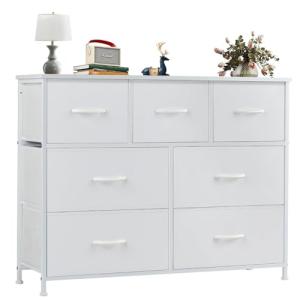
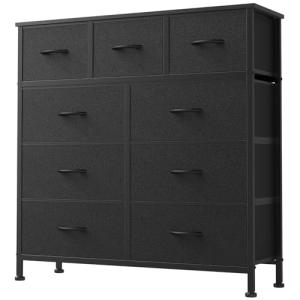
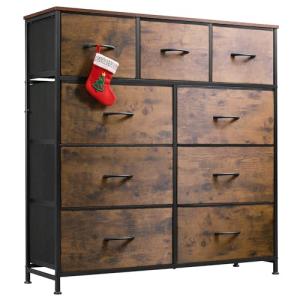
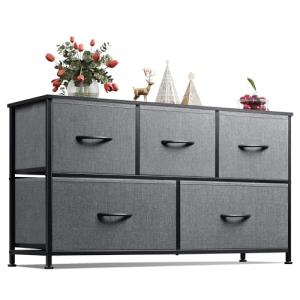
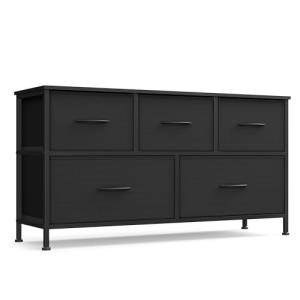
The classic dresser is wider than it is tall — typically somewhere between 60 and 72 inches wide, and 30 to 36 inches tall. These pieces usually have three to six drawers arranged in two or three columns. The horizontal format makes them ideal for placing a mirror above them, and their lower height means they don't visually dominate a room.
Standard dressers are the workhorses of bedroom storage. They offer excellent capacity without overwhelming a space, and their surface area on top makes them practical for displaying lamps, artwork, jewelry trays, or personal items.
Chest of Drawers (Vertical/Tall)
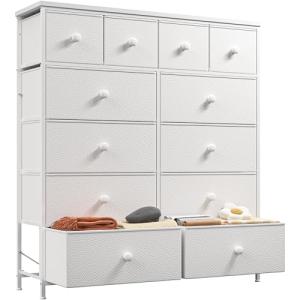
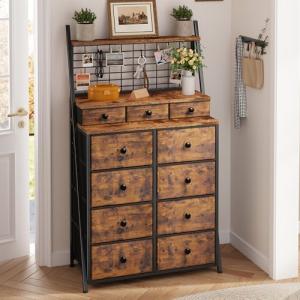
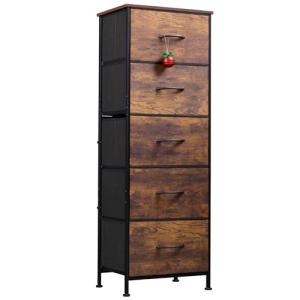
A chest of drawers takes the opposite approach: taller and narrower, typically 40 to 60 inches high and 30 to 40 inches wide. With four to seven drawers stacked vertically, these pieces offer serious storage in a smaller floor footprint — making them an ideal choice for smaller bedrooms, kids' rooms, or spaces where floor space is at a premium.
The trade-off is reduced surface area on top and, in very tall models, the need for wall anchoring to prevent tipping — especially important in households with young children.
Double Dressers
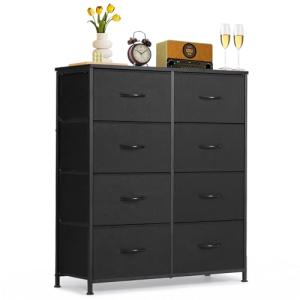
The double dresser is essentially a standard dresser at full width — often 60 to 72 inches across — with two columns of three or four drawers side by side. This format maximizes drawer count in a wide, stately package. Double dressers are popular in master bedrooms where two people share storage, or in larger rooms where the furniture needs to make a visual statement.
Bachelors and Mini Chests
At the smaller end of the spectrum, bachelor's chests and mini chests typically offer just three to four drawers in a compact form factor. These are excellent for guest rooms, small apartments, dorms, or as supplemental storage in a larger bedroom. Don't underestimate them — a well-made small chest can pack surprisingly usable storage into a tight space.
Combo Dresser and Mirror Sets
Many dressers are sold as part of a set with a matching mirror, designed to attach directly to the back of the dresser or mount on the wall above it. The dresser-mirror combination is a classic bedroom arrangement that adds both function and visual height to a room. If you're considering this setup, make sure to check whether the mirror is included or sold separately — the difference in price can be significant.
Materials and Construction — What Really Matters
The furniture market has no shortage of options at every price point, and the single biggest factor separating a dresser that lasts a lifetime from one that starts wobbling within three years is construction quality. Here's what to understand before you buy.
Solid Wood
Solid wood — oak, maple, walnut, pine, cherry, birch — is the gold standard for dresser construction. It's heavy, durable, repairable, and improves with age. A solid wood dresser can survive decades of use, withstand humidity changes in the home, and be refinished or repainted to update its look. The downside is cost: quality solid wood furniture is a significant investment.
Among solid woods, hardwoods like oak, maple, and walnut are the most durable and hold hardware (screws, hinges, drawer slides) the best. Pine and other softer woods are more affordable and still serviceable, but they dent and scratch more easily.
Engineered Wood (Plywood, MDF, Particleboard)
Most mid-range and budget dressers use some combination of engineered wood products. These materials get a bad reputation, but quality really varies.
Plywood is made from layered wood veneers bonded together, making it strong, stable, and good at holding screws. A dresser built primarily from quality plywood with a wood veneer surface can be genuinely durable and attractive.
MDF (Medium-Density Fiberboard) is heavier and smoother than plywood, making it excellent for painted finishes. It's not as strong as plywood and doesn't hold screws as well, but in the right applications — drawer fronts, side panels — it performs well.
Particleboard is the most affordable and most common material in budget furniture. It's made from compressed wood chips and resin, and while it's passable in low-stress applications, it's also the most prone to swelling from moisture and to hardware failure over time. It's not inherently bad — much depends on thickness and how the piece is assembled — but particleboard dressers at the very low end of the market often struggle with longevity.
Drawer Construction and Slides
Here's something furniture salespeople don't always tell you: the quality of the drawers matters as much as the quality of the carcass. A beautiful solid wood frame with poorly built drawers is going to frustrate you every single day.
Look for drawers with dovetail joints at the corners — a traditional woodworking joint where interlocking trapezoidal "tails" and "pins" create a mechanical bond that's stronger and more durable than simple glue and staple construction. Dovetail joints are a reliable sign of quality craftsmanship.
For the drawer slides, full-extension metal slides with soft-close mechanisms are the current standard for quality furniture. They allow you to pull a drawer out fully (so you can access the back), and the soft-close mechanism prevents slamming. Side-mounted metal slides are generally more durable than the older wooden runner systems, though well-maintained wooden runners can last a long time in quality pieces.
Check the drawer bottom too — plywood is more durable than hardboard or thin MDF. A drawer that flexes noticeably when you press the bottom isn't going to hold up.
Sizing Your Dresser Correctly
Choosing the right size dresser is partly about storage capacity and partly about proportions. A dresser that's too large for its room will make the space feel cramped and oppressive; one that's too small will look lost and fail to do its job.
Bedroom Size Guidelines
As a general rule of thumb:
- Small bedrooms (under 120 sq ft): A chest of drawers or compact bachelor's chest keeps the floor plan open. Avoid pieces wider than 36–40 inches.
- Medium bedrooms (120–180 sq ft): A standard dresser in the 48–60 inch range works well. You have options here.
- Large bedrooms and master suites: A full double dresser or large chest of drawers, up to 72 inches wide or 60 inches tall, can anchor the room without overwhelming it.
Clearance and Placement
Always measure not just the dresser itself but the space it will occupy. Allow at least 36 inches of clearance in front of the dresser so you can open drawers fully without obstruction. If you're placing the dresser in an alcove or against a wall with a door nearby, measure carefully — a drawer pulled open in the wrong direction can easily hit a door or another piece of furniture.
Consider the height relative to windows, light switches, and other architectural elements. A dresser that blocks a window entirely can darken a room significantly, while one placed just below a window can feel intentional and polished.
Styles and Finishes — Matching Your Room
Dressers come in virtually every aesthetic from spare Scandinavian minimalism to ornate Victorian revival. The style you choose should complement the overall design direction of your bedroom rather than compete with it.
Modern and contemporary dressers favor clean lines, minimal hardware (or no visible hardware at all, with push-to-open mechanisms), and neutral finishes in white, black, gray, or natural wood tones.
Mid-century modern pieces — one of the most enduring trends in bedroom furniture — feature tapered legs, warm wood tones like walnut and teak, and understated brass or brushed metal hardware. They feel timeless without being traditional.
Traditional and transitional dressers feature more detailed moldings, carved accents, and hardware in antique brass, oil-rubbed bronze, or polished nickel. These styles work well in bedrooms with more formal or classic décor.
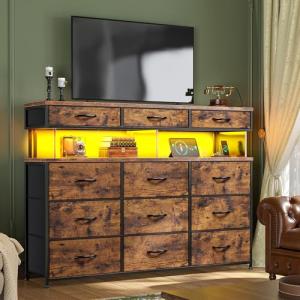
Rustic and farmhouse dressers embrace natural wood grain, distressed finishes, and straightforward construction. They're warm and characterful, though the intentionally "worn" look can look dated if the trend shifts.
Industrial styles combine metal frames or accents with wood panels, typically in darker finishes. They work particularly well in urban loft-style spaces.
When in doubt, a natural wood tone in a simple form is the safest choice — it works across a wide range of aesthetic contexts and ages well regardless of trend cycles.
Hardware — The Small Detail That Makes a Big Difference
Drawer pulls and knobs are one of the easiest ways to customize a dresser and make it feel truly yours. Many quality dressers come with attractive hardware, but since knobs and pulls are usually interchangeable (as long as hole spacing matches), swapping them is one of the simplest and most cost-effective furniture upgrades you can make.
Solid brass hardware is durable, develops a beautiful patina over time, and lends an instant note of quality to any piece. Brushed nickel and matte black are cleaner, more modern alternatives. Ceramic and glass knobs add a touch of whimsy and work especially well on painted dressers in kids' rooms.
How to Make Your Dresser Last
Even a well-made dresser benefits from a little care. Keep wood furniture out of direct sunlight to prevent fading and warping. Wipe up spills promptly, especially on painted or veneered surfaces. Use drawer liners to protect the interior of drawers from small abrasions and to keep clothing organized.
For tall pieces, use the anti-tip hardware that comes included with most modern dressers — anchoring a dresser to a wall stud takes five minutes and can prevent a serious accident, particularly if there are children in the home.
Periodically check that drawer hardware hasn't loosened, and tighten screws as needed. Wax or condition wooden drawer runners once a year if drawers start to stick.
A dresser isn't glamorous furniture. It doesn't start conversations the way a stunning sofa does, or set a mood like great lighting. But it shows up every day, absorbs the full chaos of your wardrobe, and holds the room together in ways that are easy to take for granted — until it starts falling apart.
Buy for quality over convenience. Measure your space carefully. Choose a style that will still feel right in a decade. And when you find a piece that's made well, sized right, and genuinely beautiful in a quiet, unfussy way — you'll understand why getting this decision right is worth the effort.