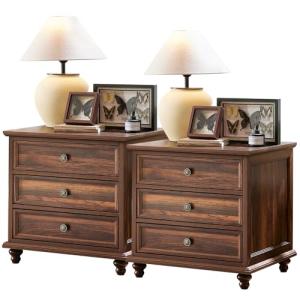
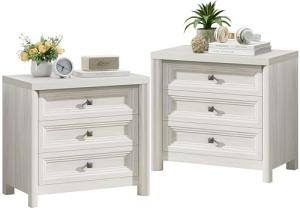
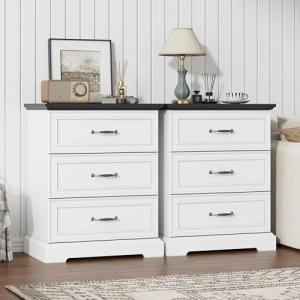
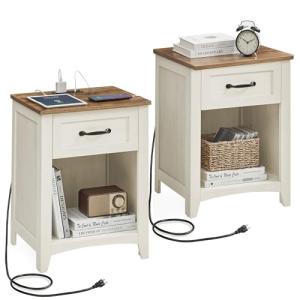
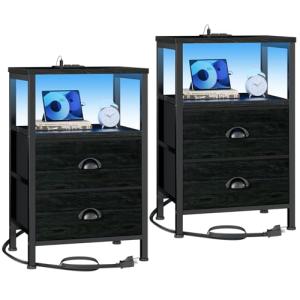
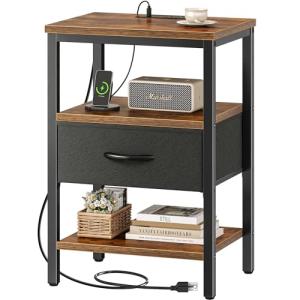
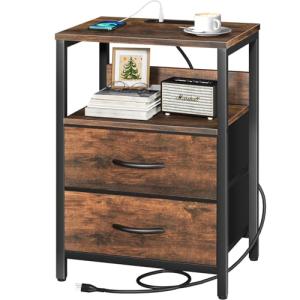
What Is a Nightstand?
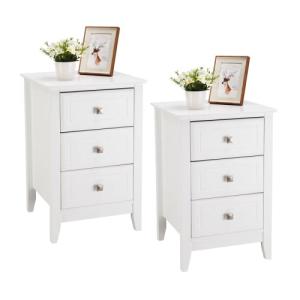
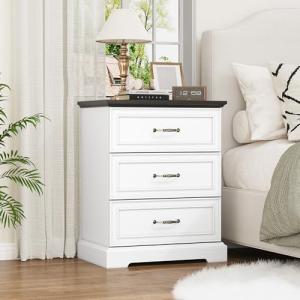
A nightstand (also called a bedside table or bedside cabinet) is a small table or cabinet designed to sit beside your bed. It keeps your daily essentials organized and accessible while also playing a surprisingly big role in how your bedroom looks and feels overall. A well-chosen nightstand frames your bed, balances the room, and ties together the aesthetic of the whole space. A mismatched or badly proportioned one can feel like a constant low-grade visual annoyance — even if you can't quite put your finger on why.
Good nightstands pull off a balancing act: functional enough to actually store and display your things, attractive enough to complement your bedroom design, and proportioned well enough that the room feels put-together rather than cluttered.
Getting the Size Right
Before you fall in love with a style, get your measurements in order. Size is the single most important factor in choosing a nightstand, and it's also the one people most commonly get wrong.
Height
The golden rule is that your nightstand surface should sit at roughly the same height as the top of your mattress. For most beds with a standard mattress and box spring, that's somewhere between 24 and 28 inches. If your surface is too low, you'll be fumbling around in the dark every time you reach for your phone. Too high, and it just looks awkward next to the bed.
Platform beds sit closer to the floor, so they pair better with lower-profile nightstands. Tall beds with thick mattresses call for taller tables. Always measure your mattress height before you shop — it takes two minutes and saves a lot of headache.
Width
Width is about both practicality and proportion. A narrow nightstand (under 21 inches wide) works beautifully in smaller bedrooms or alongside minimalist, contemporary beds where you want a light, uncluttered look. A standard-width nightstand (21 to 29 inches) gives you a comfortable working surface for a lamp, a glass of water, and a book without things feeling crammed. Wide nightstands (over 29 inches) work well in larger master bedrooms, particularly alongside oversized beds like kings and California kings, where a small bedside table would look lost.
For king beds, aim for nightstands at least 22 to 24 inches wide. For queens, something in the 18 to 22 inch range tends to feel proportional. For twin beds, you can go as narrow as 17 inches.
Depth
Don't forget depth. Most nightstands run between 14 and 20 inches deep. Deeper nightstands feel more substantial and offer more drawer space, but in a tight bedroom they can eat into your walking area. In general, you want at least 24 inches of clearance between the nightstand and any opposite wall or piece of furniture.
Storage Options: What Do You Actually Need?
This is where nightstands really diverge. Think honestly about what you reach for at night and what you want hidden versus displayed, and let that guide your storage decision.
Single Drawer
The most classic configuration. A single-drawer nightstand gives you a tidy spot to stash items you don't want on display — lip balm, earplugs, a phone charger, a journal — while keeping the top surface free for a lamp and a few thoughtful items. It's clean, versatile, and works with almost every bedroom style.
Two or More Drawers
If you're someone whose bedside situation tends to sprawl — books, medications, skincare products, charging cables, TV remotes — a two-drawer nightstand gives you genuine organizational power. You can dedicate the top drawer to everyday essentials and the bottom to things you use less frequently. Many two-drawer models also include soft-close mechanisms and felt-lined top drawers to protect delicate items. This is a strong choice for master bedrooms where storage is at a premium.
Open Shelf
Open-shelf nightstands have a relaxed, airy quality that works especially well in smaller rooms or in spaces where you want to keep things feeling light. They're great for books, a small plant, a decorative tray, or a basket. The tradeoff is obvious: everything you store is visible, so you either need to be intentional about what lives there or accept a bit of visual noise.
Cabinet Door
A nightstand with a cabinet door is ideal if you want to keep clutter completely out of sight. These tend to look more substantial and furniture-like — closer to a small dresser than a table — which suits traditional and transitional bedroom styles particularly well.
Combination Configurations
Many nightstands combine a drawer on top with an open shelf or cabinet below, giving you the best of both worlds. These hybrid designs are practical, flexible, and tend to feel more interesting visually than single-function pieces.
Materials: What Each One Brings to the Table
The material your nightstand is made from affects how it looks, how long it lasts, and how much it costs — sometimes dramatically.
Solid Wood
Solid wood nightstands are the classic choice for a reason. They're durable, timeless, and available in a huge range of tones and finishes. A mid-toned oak or rich walnut feels warm and grounded in a traditional or transitional bedroom. Lighter blonde wood and teak tones suit contemporary and Scandinavian-inspired spaces. Darker mahogany and cherry woods bring elegance and depth to more formal rooms. A well-made solid wood nightstand, properly cared for, can last decades. Look for dovetail joinery and quality hardware as signs of genuine craftsmanship.
Engineered Wood and MDF
Engineered wood (like MDF or particleboard with veneer) is what you'll find in most mid-range nightstands. Done well, these pieces can look excellent and offer very good value. The tradeoff is longevity — engineered wood won't hold up to heavy use or moisture as well as solid wood over time. That said, for a guest room or a first apartment, quality MDF nightstands with good finishes are a perfectly sensible choice.
Metal
Metal nightstands bring a crisp, contemporary or industrial edge to a bedroom. They're often minimalist in form — clean lines, harder angles, a cooler palette — and pair well with concrete, leather, or exposed brick elements. Metal is also surprisingly durable and easy to clean. Look for powder-coated finishes for better scratch resistance.
Wood and Metal Combinations
Some of the most interesting nightstands on the market blend wood tops or bodies with metal legs or frames. This hybrid approach is ideal for transitional bedrooms that want a bit of warmth without going full-rustic. The contrast between materials adds visual texture and keeps things from feeling too matchy.
Stone, Marble, and Concrete
Stone-topped nightstands have become increasingly popular in design-forward bedrooms. Marble, quartz, and concrete surfaces are striking, highly durable, and very easy to wipe clean. They do add significant weight and cost, but the look is hard to replicate with other materials.
Nightstand Styles: Finding Your Fit
Traditional
Traditional nightstands tend to have raised-panel fronts, turned legs, decorative hardware, and rich wood finishes. They feel anchored, substantial, and timeless. They work best in bedrooms with classic upholstered beds, ornate headboards, or formal furniture.
Modern and Contemporary
Modern nightstands prioritize clean lines, minimal hardware, and simple silhouettes. The emphasis is on form and restraint. Natural wood grains, matte finishes, and integrated pulls (rather than protruding hardware) are common. These pair naturally with platform beds and streamlined bedroom furniture.
Mid-Century Modern
One of the most popular styles in bedroom furniture right now, mid-century modern nightstands feature tapered legs, warm wood tones, and a confident, sculptural quality. Walnut and teak are the signature materials. They're versatile enough to work in modern spaces while still feeling warm and characterful.
Scandinavian and Japandi
Rooted in the design philosophies of Northern Europe and Japan, these nightstands lean into organic textures, natural materials, and a sense of calm simplicity. Light woods, soft shapes, and minimal decoration are the hallmarks. These work beautifully in bedrooms aiming for a spa-like, serene atmosphere.
Industrial
Industrial nightstands typically use reclaimed or distressed wood paired with metal frames or hardware. The look is rugged, honest about its materials, and often carries a vintage or urban edge. A great fit for loft-style spaces and bedrooms with exposed brick or concrete walls.
Farmhouse and Rustic
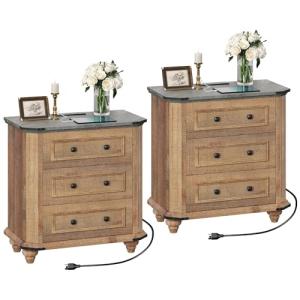
Similar to industrial in their love of natural wood and worn finishes, farmhouse nightstands lean softer and more lived-in. Distressed white or gray paint, shiplap-style fronts, and simple wrought-iron hardware are common. These suit cottage-style bedrooms, country homes, and anyone who likes a cozy, unpretentious feel.
Wall-Mounted (Floating)
Floating nightstands are one of the strongest current design trends. Mounted directly to the wall with no legs touching the floor, they create an illusion of space, are easy to clean under, and can be positioned at exactly the right height for your mattress. They work particularly well in smaller bedrooms where every inch of floor space counts, and they give a room a contemporary, intentional look.
Smart Features Worth Considering
Modern nightstands have evolved well beyond a drawer and a flat top. Depending on how you use your bedroom, some of these features might be genuinely life-changing.
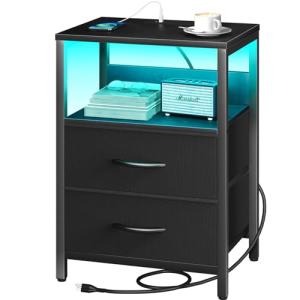
Built-in USB and power outlets — Eliminating the bedside cord tangle is a real quality-of-life improvement. Many nightstands now include integrated USB-A, USB-C, and standard power ports, typically adding a modest premium to the price but saving you the hassle of reaching for a wall outlet every night.
Wireless charging pads — Some nightstands include a built-in Qi wireless charging surface on the top, so you simply set your phone down and it charges overnight with no cables at all.
LED lighting — Built-in LED strips or motion-activated night lights are a thoughtful feature, especially if you're someone who gets up in the night and doesn't want to fumble for a lamp switch in complete darkness.
Soft-close drawers — A detail that matters more than it sounds. Soft-close drawer glides prevent slamming and feel noticeably more premium in everyday use. Once you've experienced them, it's hard to go back.
Felt-lined drawers — Common in quality nightstands, felt lining protects jewelry, glasses, and other delicate items from scratches.
Do Your Nightstands Need to Match?
The short answer: not necessarily, but they should feel like they belong together. Matching nightstands create symmetry and a sense of calm in a bedroom — which is generally what you want in a sleep space. But perfectly mismatched nightstands can work beautifully too, especially in eclectic or transitional rooms where a bit of asymmetry adds personality. The key is keeping the proportions similar and making sure the pieces share something — a wood tone, a metal finish, a general style direction — so the room feels intentional rather than accidental.
If you and your partner have different storage needs, different nightstands make complete practical sense. Just make sure they're similar in height so the bedroom reads as balanced.
What to Put on Your Nightstand
A nightstand surface works best when it's edited. The classics: a lamp (table lamps or small sconces are both great choices), a glass of water, your book or e-reader, your phone. Beyond that, a small tray helps corral loose items like earrings or lip balm into a contained visual footprint. A low plant adds life without taking up much space. A candle adds warmth and scent. Keep it purposeful — the nightstand is small real estate, and less really is more.
A nightstand is one of those purchases that rewards a little careful thought upfront. Get the height right, choose the storage configuration that fits your actual habits, pick a material and style that speaks to your bedroom's overall feel, and you'll end up with a piece that earns its place every single morning and night. Whether you're after a sleek floating shelf, a classic solid-wood two-drawer cabinet, or a modern Japandi piece with integrated charging, there's a nightstand out there that's exactly right for your space — and this guide is here to help you find it.