
Why People Snore (And Why It Matters)
Before diving into the products, it helps to understand what snoring actually is. When you sleep, the muscles in your throat relax. For some people, this relaxation causes the soft tissue at the back of the throat — the soft palate, uvula, and tongue — to partially block the airway. As air pushes through the narrowed passage, it vibrates that tissue, and that's the sound you hear.
Snoring can be mild and occasional, triggered by something like a head cold or a glass of wine before bed. Or it can be loud, chronic, and disruptive enough to strain relationships and leave both the snorer and their partner chronically sleep-deprived. In more serious cases, frequent snoring can be a sign of obstructive sleep apnea, a condition where breathing actually stops and starts repeatedly during sleep — and that's something worth discussing with a doctor.
For the vast majority of people, though, snoring sits somewhere in the middle: annoying, disruptive, and very much worth addressing with a product designed for the job.
Mandibular Advancement Devices (MADs)
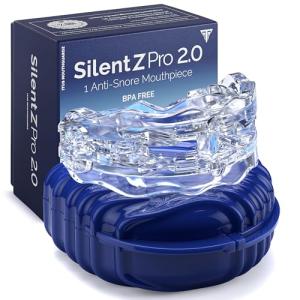
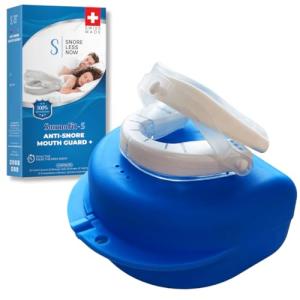
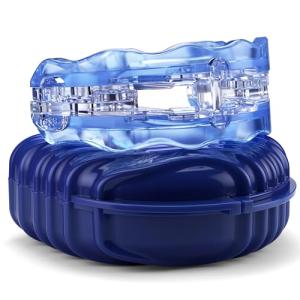
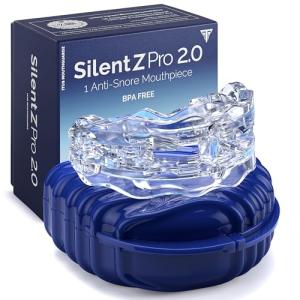
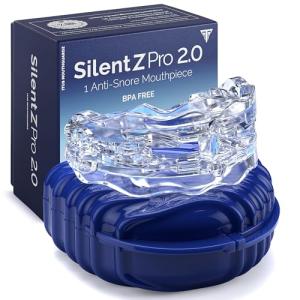
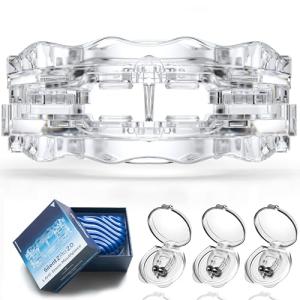
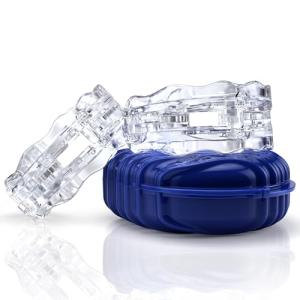
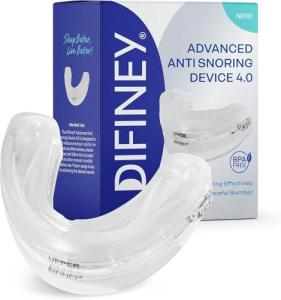
Mandibular advancement devices are one of the most well-established categories of anti-snoring products, and for good reason — they work by addressing the root cause for a lot of snorers. These are mouthguards worn during sleep that gently push the lower jaw (the mandible) slightly forward. By doing so, they open up the airway at the back of the throat, reducing the vibration that causes snoring.
Most MADs sold for home use are either custom-fitted by a dentist or come as a "boil-and-bite" design you fit yourself at home. Boil-and-bite versions involve softening the device in hot water, then biting into it to create an impression of your teeth. The result isn't as precise as a professionally made device, but many people find them effective and they're significantly cheaper.
Who they work best for: People whose snoring is caused by the tongue and soft palate falling back into the airway. They're particularly useful for back sleepers.
Things to consider: Some people find MADs uncomfortable at first, especially if they're not used to sleeping with anything in their mouth. Jaw soreness in the morning is a common initial side effect that often improves after a week or two of adjustment. They're not suitable for people with significant dental work like crowns, bridges, or loose teeth.
Tongue Stabilizing Devices (TSDs)
Tongue stabilizing devices take a slightly different approach to the same problem. Instead of repositioning the jaw, they hold the tongue itself forward using gentle suction — the tongue sits inside a small bulb at the front of the device, keeping it from falling back and narrowing the airway.
TSDs tend to be a good fit for people who can't tolerate a mandibular advancement device due to dental issues, or for those who find jaw advancement too uncomfortable. They're also generally one-size-fits-most, which makes finding a fit simpler.
The trade-off is that TSDs can feel strange to wear, particularly for mouth breathers, and some users report tongue soreness or a feeling of dryness when they wake up. Like MADs, they usually require a short adjustment period.
Nasal Dilators and Nasal Strips
Not all snoring starts in the throat. For some people, the problem begins higher up — in the nasal passages. When the nose is congested or structurally narrow, the increased effort to draw air through creates turbulence, and that turbulence causes or worsens snoring.
Nasal strips are the thin, adhesive bands you stick across the bridge of your nose before bed. They work by physically pulling the nostrils slightly open, reducing the resistance to airflow. They're inexpensive, easy to use, and disposable — you just peel one off and stick it on. Many people find them effective for congestion-related snoring, and they're completely non-invasive.
Internal nasal dilators work on a similar principle but from the inside. These small, flexible devices sit inside the nostrils and gently prop them open. They're reusable and tend to be more discreet than strips, though they take slightly more getting used to.
Who they work best for: People whose snoring is primarily caused by nasal congestion, a deviated septum, or naturally narrow nasal passages. If you tend to snore more when you have a cold or allergies, nasal aids are often the right first step.
Things to consider: If your snoring originates primarily in the throat, nasal strips alone are unlikely to make a significant difference.
Anti-Snore Pillows
Anti-snore pillows are one of the gentlest and most accessible options in this category. These are specially designed pillows — either with a shaped contour or with internal supports — that encourage side sleeping and help keep the head and neck in a position that keeps the airway more open.
Back sleeping is strongly associated with worse snoring because gravity pulls the tongue and soft palate backward when you're lying flat on your back. Anti-snore pillows make it more comfortable to sleep on your side and less comfortable to roll onto your back, nudging you toward a better sleeping position without any devices or gadgets.
Some versions go further with features like memory foam that cradles the neck, elevated head positioning, or built-in arm cutouts for combination sleepers. There are also wedge-style pillows designed to elevate the entire upper body, which can be especially helpful for people who experience both snoring and acid reflux.
Who they work best for: Mild-to-moderate snorers who predominantly snore on their back, and people looking for a non-invasive starting point.
Positional Therapy Devices
Positional therapy devices take the logic of the anti-snore pillow further. Rather than just making one position more comfortable, they actively prevent you from rolling onto your back during sleep. Options range from wearable bands worn around the waist or chest with a foam insert that makes back sleeping uncomfortable, to smart devices that vibrate gently when sensors detect you've shifted to your back.
The vibration-based "smart" devices are worth special mention. They're worn around the wrist or on a band around the chest, and when they detect back sleeping, they emit a subtle vibration that nudges you to shift position — ideally without fully waking you. Many users report that the adjustment becomes habitual within a few weeks.
Who they work best for: People who snore specifically or significantly worse on their back, and those who want a non-oral solution.
Nasal Sprays and Throat Sprays
Topical sprays occupy a different place in this category. They're not mechanical aids — they don't reposition anything — but they address snoring through lubrication and reducing tissue vibration.
Throat sprays typically contain oils or lubricants that coat the soft palate and throat tissues, reducing the vibration that causes snoring sounds. They're simple to use (a few sprays before bed) and don't require any fitting or adjustment period.
Nasal sprays designed for snoring usually work by reducing nasal congestion or moisturizing dry nasal passages, making breathing easier and reducing the strain that leads to snoring. Some contain saline, others include natural decongestants or essential oils like eucalyptus and peppermint.
These products tend to work best as part of a broader approach, or for people whose snoring is mild and situational (worse during allergy season, for instance). They're not a substitute for a mechanical device for chronic, structural snoring.
Smart and Connected Anti-Snore Devices
In recent years, technology has started to play a bigger role in this category. There are now app-connected devices that track your snoring patterns over time, giving you data on frequency, volume, and how your snoring correlates with lifestyle factors like alcohol consumption, sleep position, or sleep time.
Some wearable devices go a step further and actively intervene — detecting snoring sounds or vibrations and responding with gentle electrical stimulation or vibration to prompt a shift in position or muscle tone, without waking you up. These are more expensive than traditional aids but can provide insights that help you find the most effective long-term strategy.
If you're a data-driven person who wants to understand your snoring patterns before committing to a specific solution, a smart tracking device can be a good starting point.
How to Choose the Right Product for You
With so many options available, picking the right place to start comes down to a few honest questions:
Where does your snoring seem to come from? If your mouth and throat are the main source, a MAD or TSD is likely the most direct solution. If it sounds and feels more nasal — particularly if it gets worse when you're congested — start with nasal aids.
What position do you sleep in? Back sleepers who snore should seriously consider positional devices or an anti-snore pillow alongside whatever other product they try. It's often the combination that makes the real difference.
How severe is the snoring? For mild, occasional snoring, a nasal strip or throat spray might be enough. For loud, chronic snoring that's been going on for years, a more robust solution like a mandibular advancement device is likely needed.
Do you have any dental or health considerations? People with TMJ disorder, significant dental work, or a history of jaw problems should approach MADs with caution and ideally speak to a dentist first.
Have you ruled out sleep apnea? If you snore loudly, wake up gasping, feel excessively tired during the day despite a full night of sleep, or have been told you stop breathing during sleep, please see a doctor before self-treating with over-the-counter devices. Sleep apnea is a medical condition that requires proper diagnosis and treatment.
Getting the Best Results
One thing experienced snore-aid users consistently report is that combination approaches work better than any single product alone. An anti-snore pillow plus a nasal dilator, for instance, addresses both the positional and nasal components of snoring at once.
It's also worth being patient. Most devices require an adjustment period — often a week to two weeks — before you can accurately judge whether they're working. Using a product for one night and giving up is one of the most common mistakes people make in this category.
Finally, lifestyle factors matter alongside any product you use. Alcohol consumed within a few hours of bed relaxes throat muscles and reliably worsens snoring. Even moderate weight loss in those who are overweight can significantly reduce snoring. Sleeping on a consistent schedule and avoiding sleep deprivation also helps, since deep sleep increases muscle relaxation in the throat.
The right combination of a well-chosen product, realistic expectations, and a few small habits can make a real difference — for you and for whoever shares your bedroom.