Why Bedroom Table Lamps Matter More Than You Think
Most people pour energy into choosing the right bed frame, the right mattress, the right duvet. Then they screw in a bulb overhead and call it a day. The result? A room that feels more like a waiting room than a sanctuary.
Bedroom lighting works in layers. The ceiling light handles general illumination when you need it, but table lamps on your nightstands do something entirely different — they pull the light down to human level, create warmth in the corners of the room, and let you read or wind down without bathing everything in bright white light. The right lamp transforms a bedroom from a functional space into a place you genuinely want to be.
Beyond ambiance, a good bedside lamp is just practical. You don't want to get up and cross a dark room to hit a wall switch when you're half asleep. You want something within arm's reach, with a simple touch switch or a knob you can find without your glasses on.
Types of Bedroom Table Lamps
Not all table lamps are built the same, and understanding the different types makes shopping a lot easier.
Ambient Table Lamps are the classic choice for bedrooms. They cast a soft, diffused glow across the room rather than a focused beam. Fabric shades, opal glass, and linen diffusers are typical features, and they're designed to make a room feel warm and inviting rather than bright and clinical. These are your go-to option if your priority is atmosphere and relaxation.
Task or Reading Lamps are built for purpose. They direct light downward or at an angle, making them ideal if you regularly read in bed or work on a laptop before sleeping. Many have adjustable arms or pivoting shades so you can point the light exactly where you need it without disturbing a sleeping partner.
Accent Lamps are smaller, often more sculptural, and function as much as decorative objects as they do light sources. They're perfect for a dresser, a bedside shelf, or a corner table where you want to add visual interest without overwhelming the space.
Cordless and Rechargeable Lamps have genuinely improved over the past few years. What used to be cheap plastic novelties are now beautifully designed pieces in brass, marble, and ceramic. If your nightstand is far from an outlet, or you just hate cord clutter, these are worth a serious look.
How to Choose the Right Size
Proportion matters more than most people realize. A lamp that's too small looks lost on a large nightstand; one that's too tall towers awkwardly over the bed and throws light into your eyes when you're lying down.
As a general rule, your bedside lamp should sit somewhere between 24 and 30 inches tall when measured from the tabletop to the top of the shade. The goal is for the bottom of the shade to roughly align with your eye level when you're sitting up in bed. This way, the shade shields the bulb from direct view and spreads light in a comfortable direction.
Keep in mind your nightstand height and mattress thickness as well. A low-profile nightstand next to a tall mattress means you'll want to lean toward the taller end of that range. A higher nightstand beside a lower bed may work better with something more compact.
For shade width, a good starting point is a shade diameter that's about two-thirds the height of the base. It sounds technical, but in practice it just means avoiding shades that look too wide and floppy or too narrow and pinched.
Materials and Styles: Finding Your Fit
The base material of your lamp does a lot to establish the mood and style of your bedroom. Here's a breakdown of the most popular options and what they bring to a space.
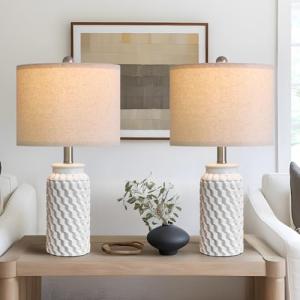
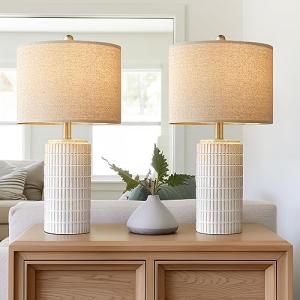
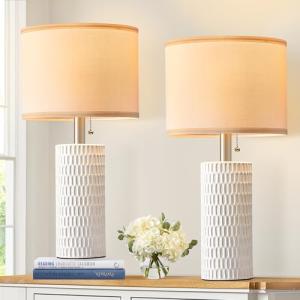
Ceramic bases are enduringly popular for a reason. They come in nearly every color and finish, they're substantial and stable on a nightstand, and they work equally well in traditional, bohemian, and contemporary rooms. A smooth white ceramic lamp is about as versatile as it gets.
Metal bases — particularly brass, bronze, and matte black — tend to read as more modern and polished. Brass has experienced a genuine revival and still feels current paired with warm-toned rooms and natural textures. Matte black works beautifully in industrial and Scandinavian-influenced bedrooms.
Wood and natural fiber bases bring organic warmth that's hard to replicate with any other material. Whether it's a turned wooden base or a lamp wrapped in rattan or woven grass, these materials ground a room and prevent it from feeling cold or sterile.
Glass and crystal bases introduce a lighter, more glamorous quality. Clear glass keeps things understated; colored or textured glass adds personality and casts interesting shadows on the wall when lit.
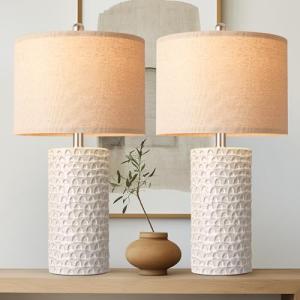
Stone and plaster bases are having a significant moment right now. Unglazed terracotta, travertine, and plaster finishes align with the broader move toward materials that look handmade and authentic rather than factory-perfect. They work especially well in bedrooms that favor a calm, restorative aesthetic.
Shade Materials and Light Quality
The shade isn't just an aesthetic choice — it determines how the light actually feels in the room.
Fabric shades (linen, cotton, silk) produce the warmest and most diffused light. They're the most popular choice for bedrooms because the light they cast is soft, inviting, and flattering. A cream or off-white linen shade is a safe bet in almost any context.
Opaque shades direct light up and down rather than through the shade itself. They create a more dramatic pool of light and leave the sides of the room in shadow — useful for creating atmosphere but less practical for reading.
Translucent glass or opal shades let light glow through the material evenly in all directions. They produce an even, ambient light that fills the space rather than directing it, and they tend to look beautiful when the lamp is on.
Paper and rice paper shades soften light into a gentle, hazy glow — very popular in minimalist and Japanese-inspired interiors where the quality of light is as important as its quantity.
Bulb Choice and Color Temperature
This is where many people make a mistake, and it's genuinely worth paying attention to.
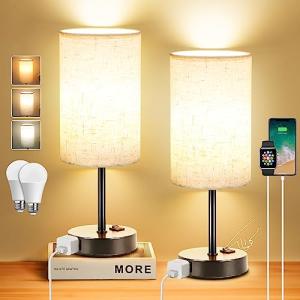
Color temperature is measured in Kelvin (K). The lower the number, the warmer and more amber the light. For bedrooms, you almost always want something in the range of 2700K to 3000K. This is the warm, yellowish light that mimics candlelight and encourages your body to wind down. Light above 3500K starts to feel cool and clinical — better for a bathroom or kitchen than a bedroom.
For brightness, around 400 to 600 lumens per lamp is a comfortable range for a bedside table lamp. That's enough to read by without being so intense it wakes you up properly when you're trying to fall asleep.
LED bulbs are the obvious choice for efficiency and longevity. If you're using a dimmable lamp — which is genuinely recommended for bedrooms — make sure both the bulb and the lamp are labeled as dimmable, and that any dimmer switch is compatible with LED technology. Mismatched dimmable setups often cause annoying flickering.
Smart Features Worth Considering
Bedroom table lamps have gotten smarter in ways that are actually useful rather than gimmicky.
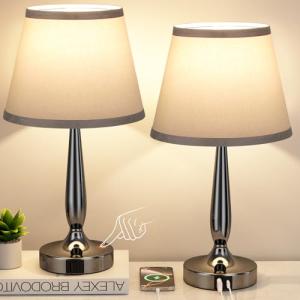
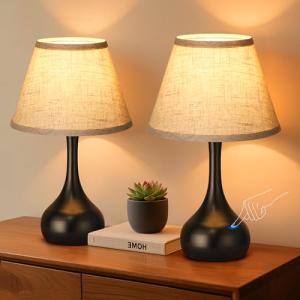
Built-in dimmers let you adjust brightness with a simple touch or twist, which is helpful when you're transitioning from reading to sleeping. Touch-sensitive bases are popular for good reason — you can find them in the dark without fumbling for a switch.
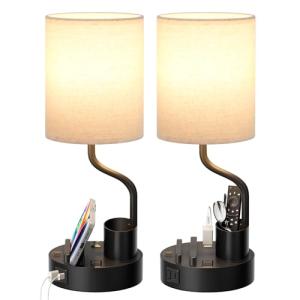
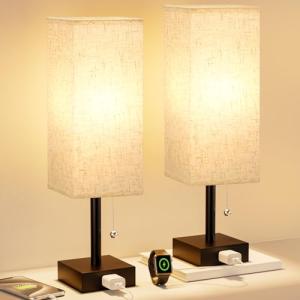
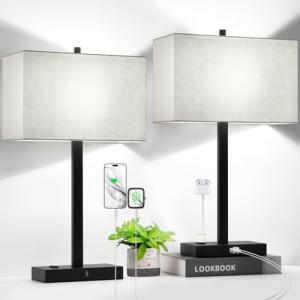
Some lamps now include USB-A or USB-C charging ports built into the base. If you charge your phone on your nightstand every night anyway, a lamp with an integrated port is genuinely convenient and reduces the cable mess.
More advanced smart lamps connect to apps or voice assistants and allow you to schedule automatic dimming, set wake-up routines with gradually brightening light, or adjust color temperature throughout the evening to support your sleep cycle. If you've never tried sleeping with a lamp programmed to shift warmer and dimmer as the evening progresses, it's worth the experiment.
Styling Both Sides of the Bed
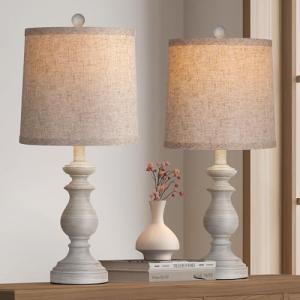
If you have a partner, the question of matching versus mismatched bedside lamps is one that comes up often. The traditional approach is identical lamps on both sides, which creates symmetry and balance. There's nothing wrong with this — it looks intentional and clean.
The more contemporary approach is to use two different lamps that coordinate rather than match. They might share a finish, a color family, or a similar height, but differ in shape or material. This approach adds more visual personality and suits rooms with a less formal aesthetic.
What you generally want to avoid is two lamps that share no visual relationship at all — different finishes, different heights, different styles. The bedroom ends up looking like a display room where nothing was decided with intention.
Common Mistakes to Avoid
A few patterns come up again and again when people choose bedroom table lamps and later regret it.
Buying lamps before measuring is probably the most common. A lamp that looks perfectly proportioned in a showroom or on a website might look miniature or towering in your actual bedroom. Always check the height against your nightstand and mattress.
Choosing style over function entirely is another one. A beautiful sculptural lamp with an opaque shade and no dimmer is going to frustrate you every night. Looks matter, but so does the quality of light it produces.
Ignoring the cord situation is easy to overlook. Think about where your outlet is before you buy. A lamp with a short cord on a nightstand far from the wall is going to leave you with an extension cord running across the floor, which is both a tripping hazard and an aesthetic problem.
A bedroom table lamp is one of the most personally felt purchases you can make for your home. It's something you interact with every single day, morning and night. Getting it right — the right height, the right light quality, the right material for your space — makes your bedroom feel like a place you genuinely want to retreat to.
Browse with your room in mind: the size of your nightstand, the height of your bed, the style of your existing furniture, and most importantly, the kind of light you want to fall asleep under. Whether you're drawn to a sculptural ceramic piece, a classic brass and linen pairing, or a cordless rechargeable lamp you can move anywhere in the room, there's something here for every bedroom and every sleeper.